Thursday, February 24, 2011

From Farm To Market

Greetings all,

Here are some pictures of what has been growing during this Sunny, Blue Sky, Cloudless, Rainy Season we have been having.
So far it is just the Beans that have been selling and we (Simeon and I) have almost reached 1/5 of our goal to break even. The carrots are aching to be harvested and some leafy greens aren't far behind. Doesn't that cilantro scream Avocado Please?!

We are selling to many different people, the neighborhood markets where Simeon can sell a lot at a time but for a lower price, the American School and other International schools buy smaller quantities but at a higher price and the Kachelo market and the monthly market at the Dutch Reform Church are mid sized and help to get our name out there. I am working on a "Meet Your Farmer" campaign with posters and cards etc...so we can emphasize who we are and that when you buy TTF veggies you are directly supporting the kids and caregivers at the clinic. I am all over the idea of social business and if we can make this farm start generating some profit and actually paying people to run it, well that would be a good day.

Tomorrow begins a new adventure as we move into construction of animal homes for our Goats, Ducks, Rabbits, Turkeys and Layers. I am most excited about pouring a cement Duck Pond!

Also a link to a friends Blog with some pictures of the Lubuto Library where Mom and I work.


Wednesday, February 23, 2011

Livingstone revisited


This past weekend (Feb. 11-13) the entire staff of the School of Education participated in a strategic planning retreat at a hotel in Livingstone.  On Friday we traveled by bus for 6 hours and then worked on the plan for 4 hours.  Saturday we worked from 8:00 until 10:30 hours.  The Dean then sent us all off to play - traveling to visit a traditional village,
Traditional village work...


and village play...


Baobab tree - UN World Heritage


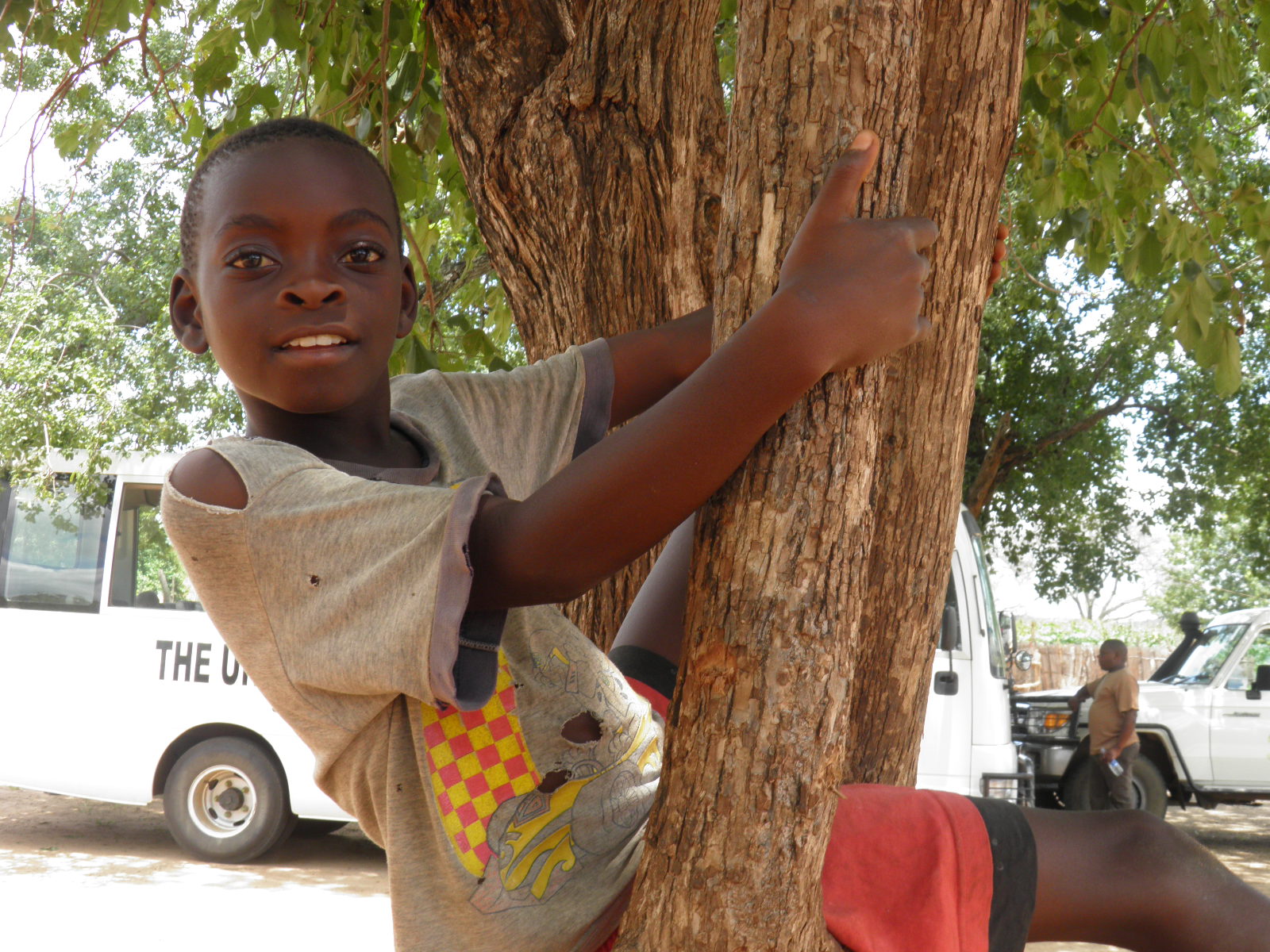
climbing the baobab tree to see the smoke from Victoria Falls miles away,


then to the falls itself. Go back and look at the Victoria Falls-Mosi-oa-tuna (Smoke that thunders) - pictures from last November and then look at the February ones.  I was told by one of the guides at the falls to come again in April when there would be no rocks whatsoever in sight.  Try to imagine the sound and feel the warm rain of the "Smoke".  Walking the same walks in November we were hot and dry.  This time I was warm and very very wet.
In November we took pictures from behind the trees on the left.


Incredible thundering noise.

                                                                                                                                                                                                                  
Seen through warm rain.

The same place we started hiking across the lip of the falls in our November trip.

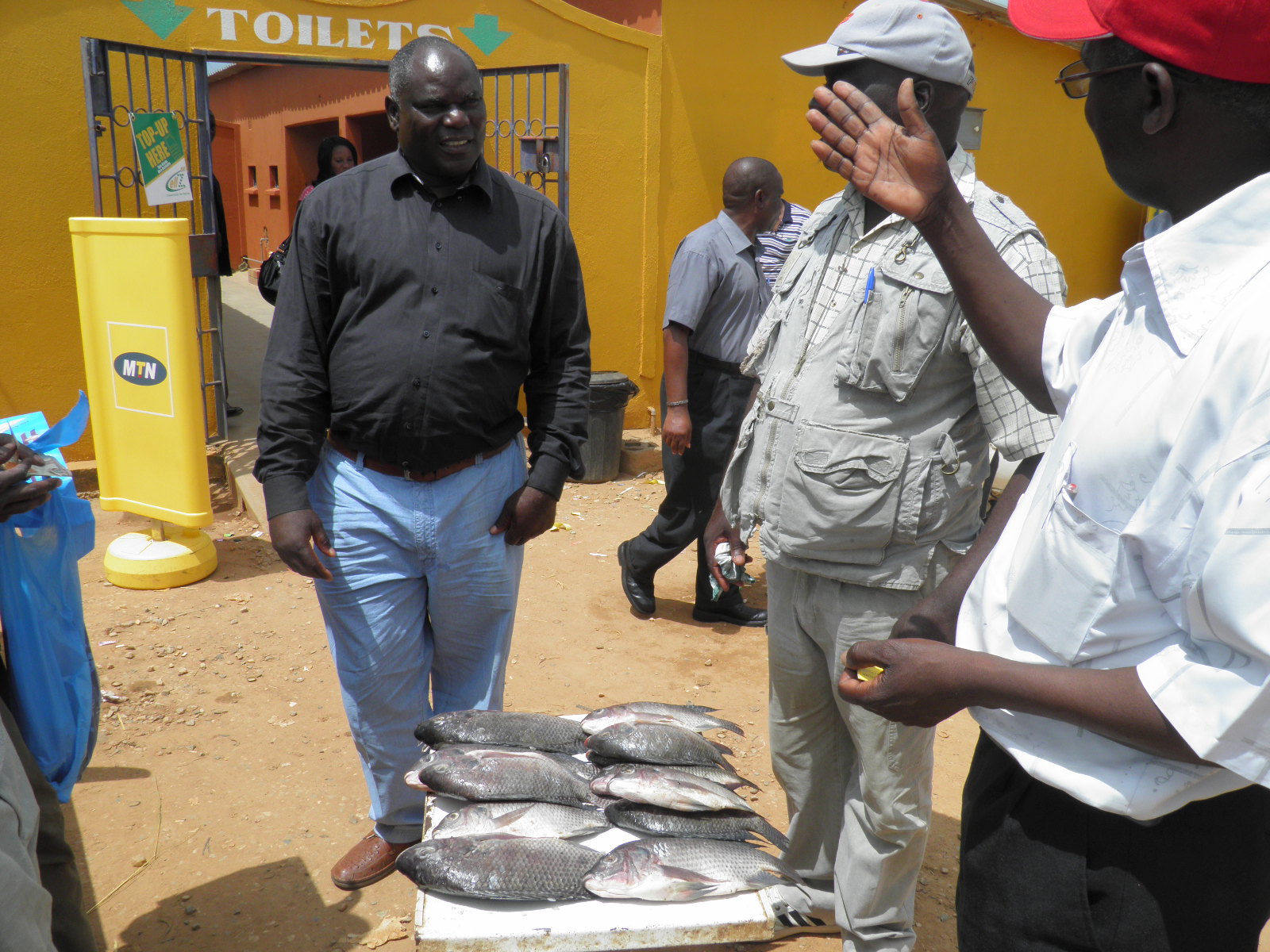
Sunday was another long ride on the bus but with more frequent stops to buy beef, then guinea fowl, then fish and finally bananas.

Purchasing fish

Guinea Fowl in carrying cage


Back on campus Monday morning, I saw so many lecturers I had not known before the weekend.  It is good to put faces together with names from name plates on offices, and to greet people with their names and ask how things are at their homes (part of the greeting ritual).

   -Mary


Saturday, February 19, 2011

Teaching...


So you think to yourself, "Mary went to Zambia to teach, didn't she?  How come she doesn't write about that?" After several months of getting ready for the new term, I am finally teaching.

Arriving in October meant that I came just as the first semester exams began.  Exams run for three weeks followed by three weeks of marking, moderating grades and presenting results to outside examiners.  I participated best I could in all the department and School of Education meetings but with very limited,well, actually no responsibilities.  I spent time working on school library curriculum, the Lubuto Library Project and writing a chapter for a book on school librarians and school libraries that will be published in the spring by two international library associations, IFLA and IASL.

 The second semester which was to start 27 December was pushed back to 17 January.  The first week was all about registration.  Only then did the lecturers sort out who was teaching what portions of what courses     ( each course is shared by at least three lecturers, each taking different units), and who would facilitate tutorials.  Each class meets three times a week for one hour lectures and in small groups for an additional hour of tutorial.  Classes average from 88 - 120 students in the lectures and 20-25 in the tutorials. I am responsible for electronic resources and services units in the basic reference class and one tutorial; a tutorial with the first year students in library and society course; and the seminar in legal issues in libraries and information services for the graduate students. Its a challenge to remember where to be at what time on any given day, i.e. the reference course lectures are Tuesdays at 13:00 hours in the Math Lab, Wednesdays at 17:00 hours in the Lecture Hall I and Fridays at 13:00 hours in the Lecture Hall I. My tutorial for this course is Tuesdays at 8:00 hours in the Cataloging Lab.


The students are many, very verbal and quite welcoming.  I am slowly learning names and faces.  Many have found my office on the fifth floor of the Education building and have come to visit, inquiry about studying in the U.S., asking followup questions from lectures and tutorials.  We are getting along.  Likewise, the other lecturers are very very warm in their welcome and try by all means to include me in the department meetings, activities and concerns. I went to the wedding of one lecturer, attended the funeral of another lecturer's twin brother and welcomed a new baby of yet another of the lecturers. In many ways, life here is much the same as in the U.S. with the same range of human emotions and reactions to those feelings.

Using a variety of active learning strategies challenges the students.  The education model is a hold-over from colonial times.  Lecturers lecture and students copy in notebooks what the lecturers are reading from notes.  Partly the model and also partly the lack of textbooks and library materials. The tutorials are much more active focusing on student presentations, small group discussions, revision of lecture notes. Classes being 1 hour in length makes the note-taking manageable.

The collection in the UNZA Library appears to have had little added to it since 2000.  The library itself is in need of renovation and major repairs.  The roof leaks and in this rainy season the upper level of books are wet and mildewed and not for the first time.  The library auditorium where many classes meet including one of mine has deteriorated ceiling tiles, puddles on the floor when it rains and a very musty, moldy smell.  There have been numerous calls to fix the library and many plans including work to be done this year. But like many institutions of higher education, resources are limited and the needs for physical maintenance across the campus many.

This week's assignment in the reference sources and services class is to consult encyclopedias, dictionaries, almanacs and yearbooks, answering questions and recording the process. A very familiar assignment for library studies but perhaps in a more challenging environment. My biggest concern is the lack of access to electronic resources and even to the standard texts for reference courses that discuss electronic sources. I am very intrigued with a project from the University of Iowa library school called e-Granary.  Described as an "internet in a box" the software provides access to webpages, full-text articles and includes the possibility of lecturers creating syllabi with links to resources in the database all without needing an Internet connection.  That would be so helpful for students here and a good way to introduce them to using electronic sources.

So, I am teaching and enjoying the challenges it presents.  The students and I are mostly together - ti pamodzi - as they say. Oh, and I did hear yesterday, a very very colloquial way of saying "raise your hand" - in some churches the call to raise arms in praise is "stand up your hands"!

   -Mary

Saturday, January 22, 2011

day to day

I am many weeks late on my blog update. Nora has sent me threatening text messages and reminded me so often that she is now appearing in my dreams. So here is a look at what my day is like in Lusaka….
">


Road to the farm

Snack shop on the way to the farm

I wake up around 7 to the sound of the electric kettle boiling on the other side of my wall. We have cereal or toast for breakfast and I pack up and head out to the farm. It takes about 45 minutes to walk to the farm. I think I am supposed to get a bike soon, but we shall see. My favorite thing to see on my walk is the occasional pool game being played by some kids at a corner snack stop. They have made a miniature pool table out of cardboard and the bottoms of plastic bottles. They play with marbles. And they loved when I took a picture of them playing, they just couldn’t stop laughing!

Once I get to the farm I chat with Simeon, the Farm manager about what he has planned for the day and then we get to work. Recently we have come into some funding and were able to plow two acres. We are planting squash, cukes, watermelon, white pumpkin, sweet corn, Swiss chard, beets, carrots, peppers, cabbage, bok choy, lettuce, basil and cilantro. We may also be planting some sunflower to make sunflower oil, but it may be too late in the season. This is a first for Tiny Tim and Friends, to have veggies, so my goal is to see what grows well and what sells well. Then hopefully they can continue turning the farm into a fully functioning place, providing food for patients of the clinic and selling enough to keep the place running.


The farm is also inheriting goats, ducks, rabbits, and turkeys at the end of the rainy season. So I am working with the builder and the two parties involved in the animal husbandry training program in designing/building some animal structures that are cost efficient and long lasting. The idea is to train young people how they can raise animals in their homes and then bring them to market to sell. So far we have found a great market for the rabbits. The Chinese restaurants here just can’t get enough of them!

The gate to the farm


I connected with Peace Corps Zambia the other day so Simeon and I attended a training session on conservation farming, breeding ponds for fish farming and beekeeping. It was great to get some info on what kinds of things volunteers are promoting in their communities and some more Zambia specific details about farming etc… No one in PC is doing worm composting! Gasp! So I am hoping to get out to some volunteers sites to help them start worms. It would also be nice to get out of Lusaka for a bit.

Cukes and Squash


Next week I start teaching dance at the American school, and I have been volunteering at the Lubuto Library a bit, though we are seeing a need for more explanation of what a library is used for because at the moment I spend most of my time re-shelving unread books and making sure everyone signs in and no one steals other peoples bags. But mom is helping out so she will whip it into shape I’m sure.


Chamba Valley


Our social life revolves around the occasional dinner with the neighbors and usually a weekend brunch or dinner out to the Arcades shopping mall. I think it is safe to say we are enjoying our time but missing our friends. So I hope you are all well and enjoying the wicked winter!


Our garden at the house and mom in her chitenge

Tuesday, January 11, 2011

Tidbits

Post Christmas thought...During the play presented at Mass on Christmas Eve (described by Bill in previous post), instead of Mary and Joseph finding no room in the inn, they found no doctors at the hospital who would help birth the baby because Mary and Joseph were poor people and couldn't afford the fee.


Mangoes and snails...In the night there is a thunk on the roof and then a plop on the ground as the mangoes fall from the trees.  As you can see, mangoes are plentiful to eat and even the snails like a nibble on their way to ?.


 The children come daily to collect the fallen mangoes.
 The large seeds litter the grounds and I am surprised
 there aren't more groves of mangoes based on the
 number of seeds on the ground.

The snails truly move at a "snail's pace".  The one below took over an hour to move less than 6 inches to reach the mango.


Birds and trees...The Zambian Ornithological Society has a checklist of over 5,000 bird species in the country.  A neighbor has identified at least 40 of them here on the Justo Mwale campus.  Dove varieties abound waking us each morning with cooing as well as a piercing hooting. Nora and I will participate in a bird counting event this coming Sunday.


And then there are the trees.  All the flowering trees are producing their fruits - not just mangoes but long seeds pods on the flame trees, small green lemons, bananas and all sorts of small nuts. Many of the these "fruits" are edible, some not, some tasty and others not. There is a grove of bamboo at the end of our driveway.  In the rain, the bamboo clatter and make hollow sounds as they move with the wind.


Update on teaching...I am told that classes begin this coming Monday, January 17.  On Friday I hope to see the schedule of classes, my assignments and maybe get a key to an office. Students are returning this week to register for classes after which the timetable is set. Everyone is greeting old friends, the new students look a bit bewildered - all reminding me of the first week of classes at St. Kate's. I am sure I look bewildered as well as I find my way to classrooms and lecture halls.

-Mary

Tuesday, January 4, 2011

Our Festive Season

    The time leading up to and around Christmas and New Year’s Day is called The Festive Season, here in Zambia – at least in the news media and retail advertising. It was a quiet time for us. Our friend Jennifer Campbell, Lubuto Library Project’s volunteer from St. Charles IL, stayed with us both Christmas and New Year’s weekends. Besides being good company, she  helped a lot with meal preparation and household chores.

    I wish I had photos and sound from Christmas Eve mass at Christ the King Parish in Kaunda Square.  Two choirs, accompanied by guitar, bass, keyboard and traditional drums, filled the church with their full-throated sound. The singing’s power never ceases to move me, even though I don’t understand the words. It has the force of wind, moving the air, causing the very molecules to vibrate. Must be similar to what you’d feel inside a microwave oven. There was dancing too – both organized and spontaneous – and a sketch performed by young people.

    Mass started at 7 p.m. By 9 p.m., I fell to thinking about supper awaiting us at home. But no one, besides us, seemed eager for the liturgy to wind up. I suppose, if you don’t have a lot of food in the house, singing and dancing joyfully to the Lord is as good a way as any to spend the night. Mass concluded around 10:30 and we tucked into our Lasagna shortly after 11 p.m.

    On the day after Christmas and, again, on New Year’s Day, we held open house. It was good to see friends from Zebra House and their families and to meet our neighbors here on the Justo Mwale campus. All visitors brought their appetites and demolished the foods we had prepared. Our Cinyanga teacher Dennis Ndalameta also came to lunch on New Year’s  Eve, with his mom and dad, sisters, brother-in-law and other family members. In the evening, we went next door to the Ellingson’s for a brai (cookout) with American neighbors. We were home in time to watch the ZNBC countdown on TV and jump off the chairs at midnight.

- Bill

Dishing up the chakudya: Mary, Nora and Jennifer. Photo by Lebo


Eat and talk. Photo by Lebo

It's raining! Bring some chairs inside. Photo by Lebo

Mrs. Ndalameta gave Mary a Chitenge. Photo by Bill

Thanks for coming. I'll accompany you part way. Photo by Lebo


Eagerly awaiting the midnight hour. Photo by Lebo

Tuesday, December 28, 2010

State of the Unions

Have not yet learned results of the leadership election at the Quadrennial Conference of the Zambian  Confederation of Trade Unions taking place this week.  But here's an article from The Post of Zambia reporting comments of one observer re. the state of organized labour in Zambia.
http://www.postzambia.com/post-read_article.php?articleId=16679&highlight=ZCTU
- Bill