Sunday, April 3, 2011

From the local press

Here are a couple of recent articles from The Post of Zambia, a lively, informative and unabashedly partisan newspaper.
On a different tack entirely, I recently read again Carl Sandburg's Chicago, and couldn't help thinking of Lusaka. Wonder if any Zambian poet has hymned this sprawling, brawling, hard-working, gritty metropolis.

- Bill

Tuesday, March 29, 2011

Lusaka: Everyday memories

A Wednesday in February
"Hot work," I remark.
"Yes," he says, resting his load,
"The bike is buggered."


March 23
Walking to Grippes, I
pass lush fields of maize and grass -
that stink of sewage.

March 24
A fruit vendor's small
girl greets me every morning:
"Hello! How are you?"

March 26
On Munali Road,
singing choirs pass on trucks . . .
followed by a hearse.

March 27
Hard pew, long sermon,
but the singing moves the air,
stirs my sleepy soul.

March 29
Chamba Valley dawn:
Cocks crow, a dove coos, "Get up!
There's work to do!"

-- Bill

Sunday, March 13, 2011

Grippes

  Grippes is what’s called a “peri-urban community.” It’s on the northeastern edge of Lusaka, about a mile and a half from where we stay. Most homes there are made of mud bricks with grass roofs. The Lusaka Council has annexed the area and plotted it out, so nice houses are being constructed along the road leading to and curving around the settlement; and - as I understand it - people already living there have been allocated plots on which to build homes. Fields of maize and pumpkins, beans and sweet potatoes surround the village, and plots of vegetables grow amongst the houses.

  Grippes residents are trying to improve their lives and living conditions, with the support of an NGO called Grassroots Heroes International (GHI). Community development projects include a community primary school, an adult basic education program, tailoring classes and a program through which people learn to raise and market goats, rabbits and ducks (for their eggs). 

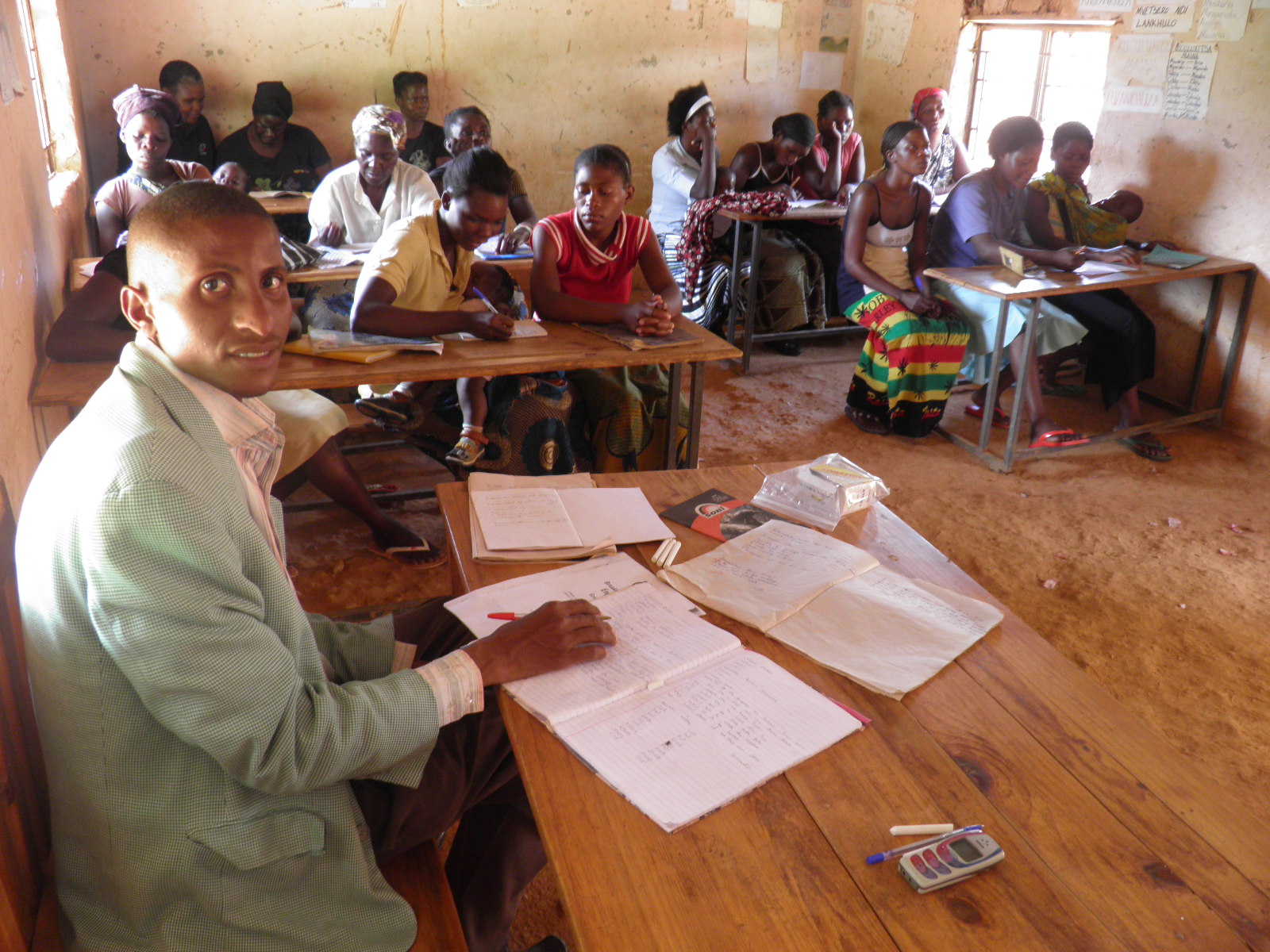
  At the request of Mr. Vincent Luwizhi, GHI’s local representative and a neighbor of ours at Justo Mwale, I’ve been assisting with adult basic education. Mr. Boyd Ngoma started a class in reading and writing English, in October with eight learners. Now, there are 40 or more. When I came, Boyd split the learners into two groups and asked me to work with the beginners. So, on Wednesday and Friday afternoons and Saturday mornings, I'm helping ladies learn the alphabet, develop phonemic awareness and learn letter-sound associations. We communicate in a mixture of Cinyanja and English ("Chizungu"), which isn't ideal because it's best to learn these things in your mother tongue. But we manage, somehow, and I'm trying to recruit a Zambian friend or two to take up the work. Meanwhile, it's fun.
 -- Bill
The Grippes adult learning community (with a couple of passers by). Photo by Bill

Mr. Ngoma with the more advanced learners. Photo by Bill
Our ABC class. Photo by Boyd Ngoma

Grippes ABC learners. Photo by Bill


Saturday, March 12, 2011

Mary's Birthday

Mary's Birthday Party. 
Left, from bottom of circle:  Isobel Patterson, Sophie Patterson, Amy Patterson, Kendra Bowman (face not visible), Bill, Nora, Jennifer Campbell, Mary, Neil Patterson. Photo: Lebo.
 

 We celebrated Mary's birthday for a whole weekend. Lebo and Nora were house-sitting on Friday (the actual day) so Mary and I had supper at the Times Bar and Cafe in Arcades Mall, completed with two varieties of Baklava (Serbian and Greek) and coffee, at Mint Cafe. On Saturday, Lebo and Nora arrived early to help prepare a delicious feast of Terry & JP's beer & honey-glazed ribs, coleslaw and potato salad, finished with a scrumptious chocolate cake that Nora made from scratch and Lebo frosted - accompanied by ice-cream, of course. Jennifer, from Lubuto Library Project and Mary's Fullbright colleagues, with spouses and children, came for the party. But that wasn't the end: On Sunday evening, friends Bambang and Putu joined us for a brai. Poor Mary had a meeting at the University and arrived home late, so the fire required some resuscitation before we could cook, but we had a lovely dinner in the end. 
-- Bill

"We'll count the years away!" Photo: Lebo.
Nokia-Siemens engineers Bambang (l) and Putu, at work. Photo: Bill

Thursday, February 24, 2011

Tidbits 2

I started this "tidbits" back in February and then was distracted. How can it be April and Easter already? Time is beginning to move too quickly with much still to see and do.

To celebrate Black History Month the U.S. Embassy - brand new, up on a hill, looking imposing, frightening, embarrassing depending on your relationship with it - invited an assortment of Zambians, Americans and others from countries far and wide to a Happy Hour, photography exhibit and Jazz Band entertainment. Bill and I danced... A lovely time had by all.

Death is everyday in Zambia. The road we live on goes to a cemetery. There are daily processions of cars and trucks and buses full of singing and grieving families, colleagues, neighbors... I have been to three funerals and contributed to two others - all colleagues' family members. It seems as if every morning there is at least one University of Zambia vehicle boarding lecturers and staff to attend a funeral. It is typical for women to wear their chitenje cloth wrapped around their waists to protect from dust, dirt etc. Sitting in the back of a pickup truck can be dirty as well as bruising. The women wail and ululate during the procession to the cemetery as well as during the final viewing of the body done graveside. The grave is dug by family members or hired grave diggers. Once the body is lowered into the grave, the men and boys take turns shoveling the dirt into a high mound. Flowers, generally roses, are passed out to the mourners who then stick the stem into the mound so that is appears to be a cloth of roses draped over the grave. Following the burial there is food, singing, dancing, storytelling - all that is familiar territory. Nora came home one day from the clinic telling how a mother brought her dead child to the clinic. She didn't know what else to do. And Nora has had several other children, patients at the clinic, die from complications of AIDS. The average length of life in Zambia is falling, currently around 39 years of age.

Church liturgies for Easter are very oriented toward the northern hemisphere - new life represented by chicks, bunnies, lambs, and new growing plants. Here there is a fall tang in the early morning air, the leaves are yellow and red, dropping to the ground. Hard to experience the new life in a time of dying, repose and waiting for what new to come.

I have finished with the second semester lectures and tutorials. This week is study week and then exams consume the month of May. Those who co-lecture set exam questions which are reviewed by the other lecturers in the department. After the students write the exam, the person who set the question, grades the student response to that question. Exam papers are passed from lecturer to lecturer until the marking is complete. The course co-ordinator then compiles the composite score for each student. The Head of Department then calls all lecturers together to "moderate" the grades, i.e. make sure the scores are accurate and distribution within the School guidelines. A very different and labor intensive process from what I am used to. Looking for the internal logic...

This week I meet with Zambians accepted to study for undergraduate degrees in the U.S. I am to talk with them about what to expect in the American college/university classroom, what faculty are looking for in students etc. I know the first comment I need to make is, "please speak louder". Your instructor will not be able to hear you and you will not be heard in class discussions. Everyone here is very soft-spoken, projecting a voice to speak is not required or appreciated. I find myself having to walk up and down the one aisle in the classrooms I lecture in if I have any chance at all of hearing a question a student is posing.

Mary

From Farm To Market

Greetings all,

Here are some pictures of what has been growing during this Sunny, Blue Sky, Cloudless, Rainy Season we have been having.
So far it is just the Beans that have been selling and we (Simeon and I) have almost reached 1/5 of our goal to break even. The carrots are aching to be harvested and some leafy greens aren't far behind. Doesn't that cilantro scream Avocado Please?!

We are selling to many different people, the neighborhood markets where Simeon can sell a lot at a time but for a lower price, the American School and other International schools buy smaller quantities but at a higher price and the Kachelo market and the monthly market at the Dutch Reform Church are mid sized and help to get our name out there. I am working on a "Meet Your Farmer" campaign with posters and cards etc...so we can emphasize who we are and that when you buy TTF veggies you are directly supporting the kids and caregivers at the clinic. I am all over the idea of social business and if we can make this farm start generating some profit and actually paying people to run it, well that would be a good day.

Tomorrow begins a new adventure as we move into construction of animal homes for our Goats, Ducks, Rabbits, Turkeys and Layers. I am most excited about pouring a cement Duck Pond!

Also a link to a friends Blog with some pictures of the Lubuto Library where Mom and I work.


Wednesday, February 23, 2011

Livingstone revisited


This past weekend (Feb. 11-13) the entire staff of the School of Education participated in a strategic planning retreat at a hotel in Livingstone.  On Friday we traveled by bus for 6 hours and then worked on the plan for 4 hours.  Saturday we worked from 8:00 until 10:30 hours.  The Dean then sent us all off to play - traveling to visit a traditional village,
Traditional village work...


and village play...


Baobab tree - UN World Heritage


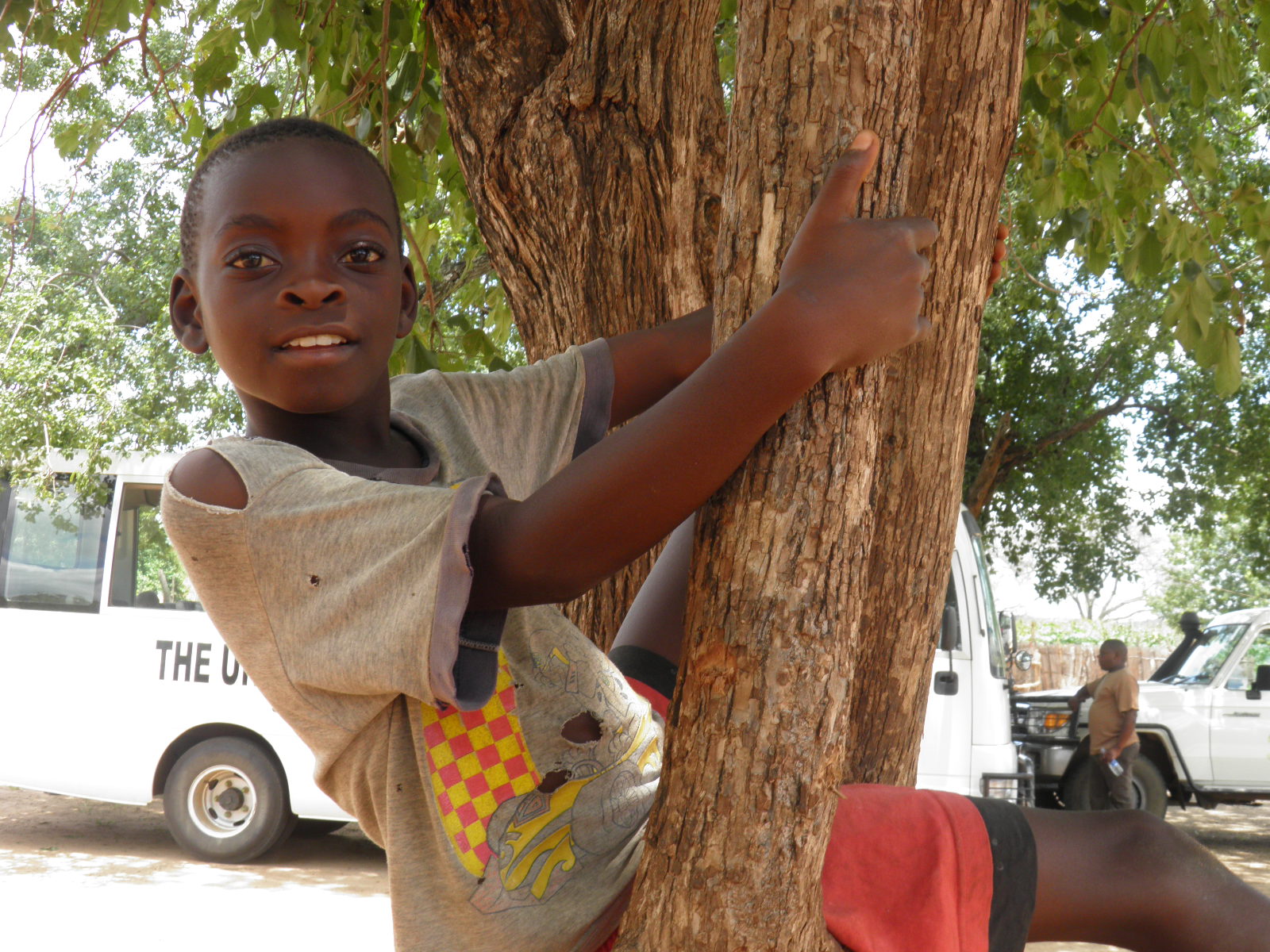
climbing the baobab tree to see the smoke from Victoria Falls miles away,


then to the falls itself. Go back and look at the Victoria Falls-Mosi-oa-tuna (Smoke that thunders) - pictures from last November and then look at the February ones.  I was told by one of the guides at the falls to come again in April when there would be no rocks whatsoever in sight.  Try to imagine the sound and feel the warm rain of the "Smoke".  Walking the same walks in November we were hot and dry.  This time I was warm and very very wet.
In November we took pictures from behind the trees on the left.


Incredible thundering noise.

                                                                                                                                                                                                                  
Seen through warm rain.

The same place we started hiking across the lip of the falls in our November trip.

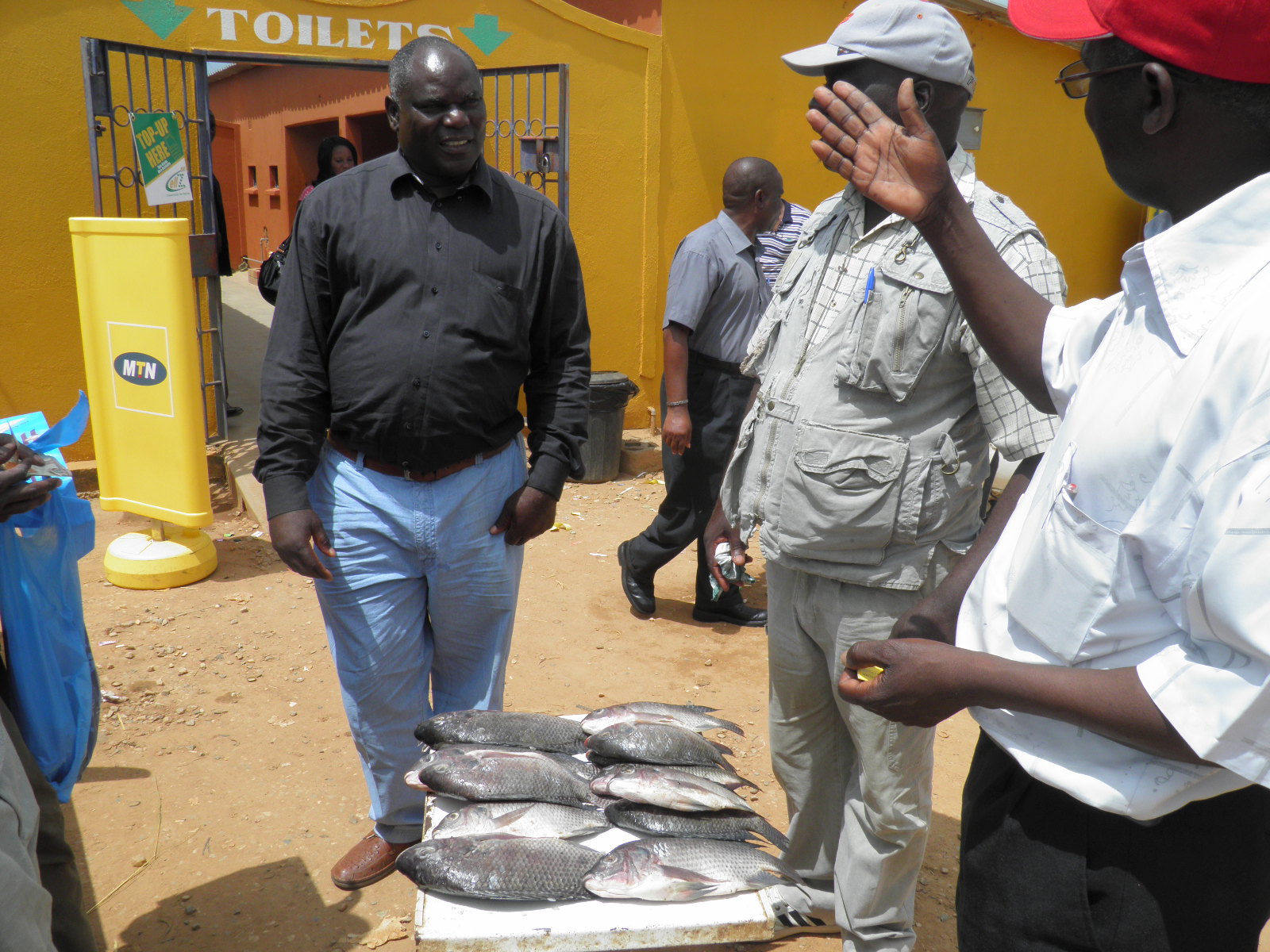
Sunday was another long ride on the bus but with more frequent stops to buy beef, then guinea fowl, then fish and finally bananas.

Purchasing fish

Guinea Fowl in carrying cage


Back on campus Monday morning, I saw so many lecturers I had not known before the weekend.  It is good to put faces together with names from name plates on offices, and to greet people with their names and ask how things are at their homes (part of the greeting ritual).

   -Mary